

-
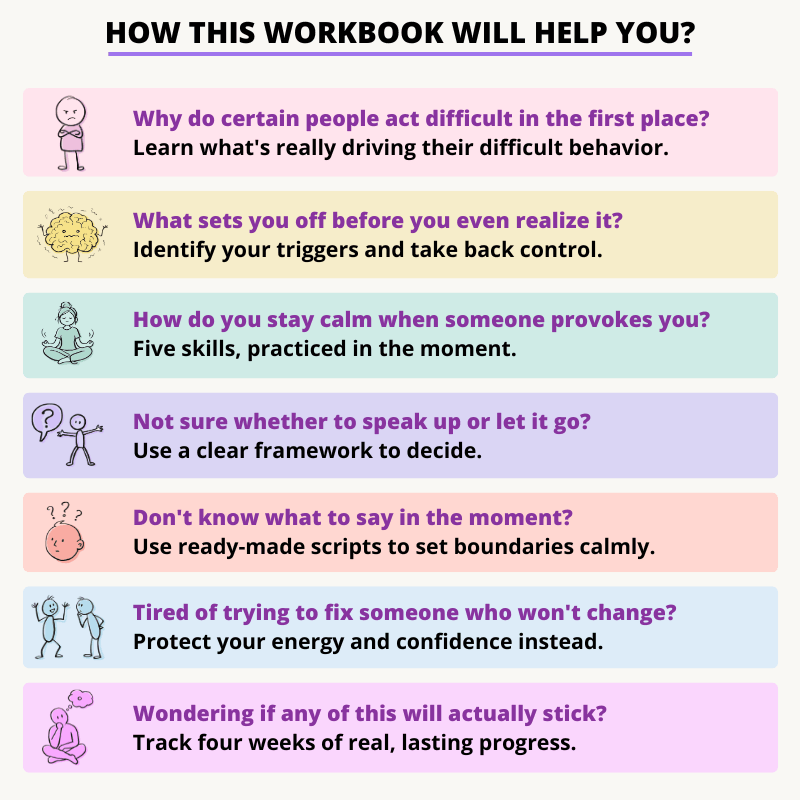
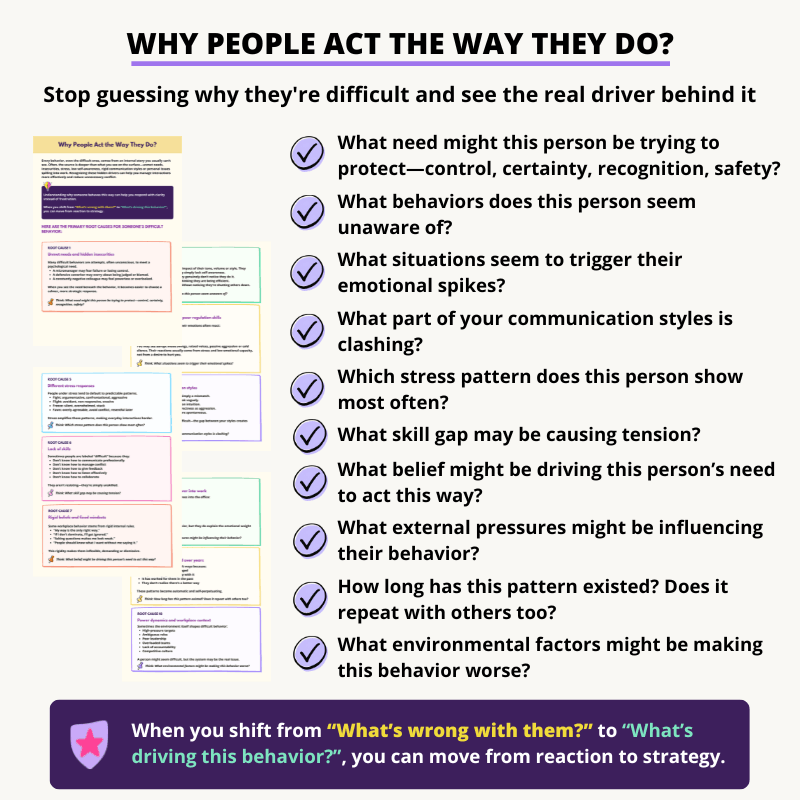
Understand the behavior and what's really driving it.
-
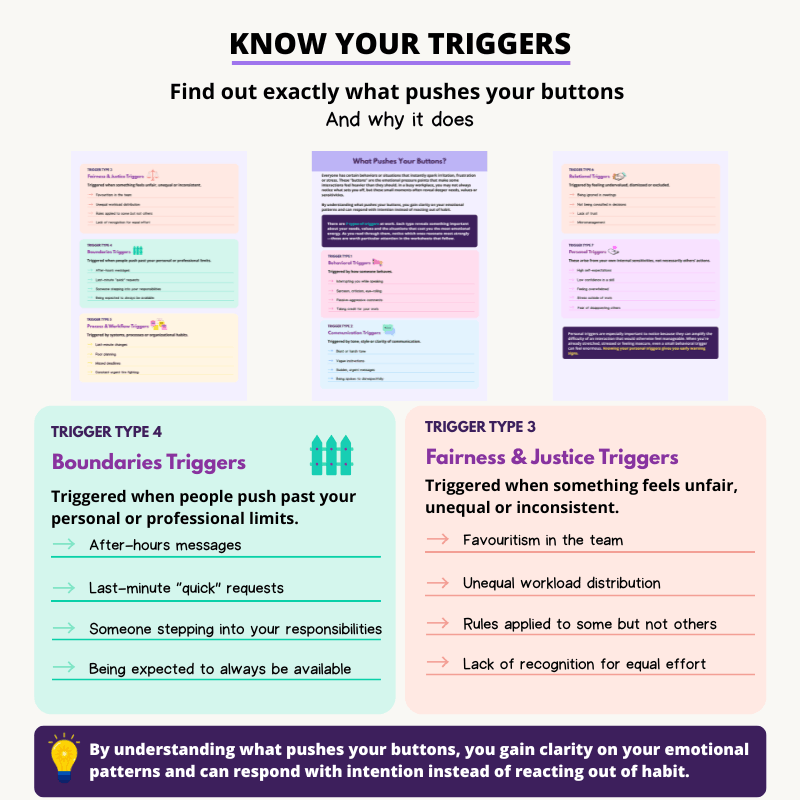
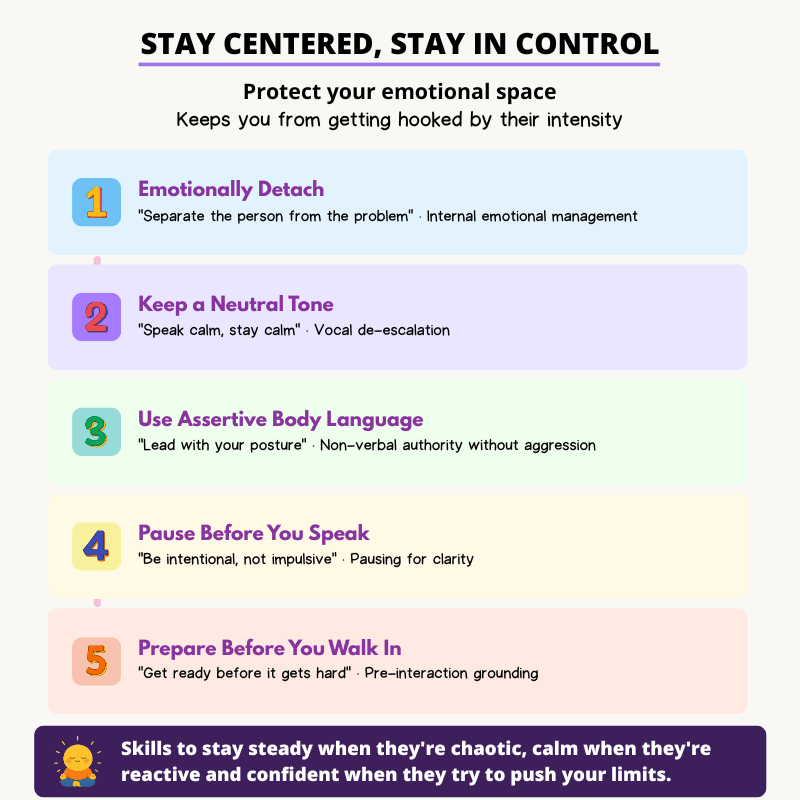
Manage your own emotional response before you engage.
-
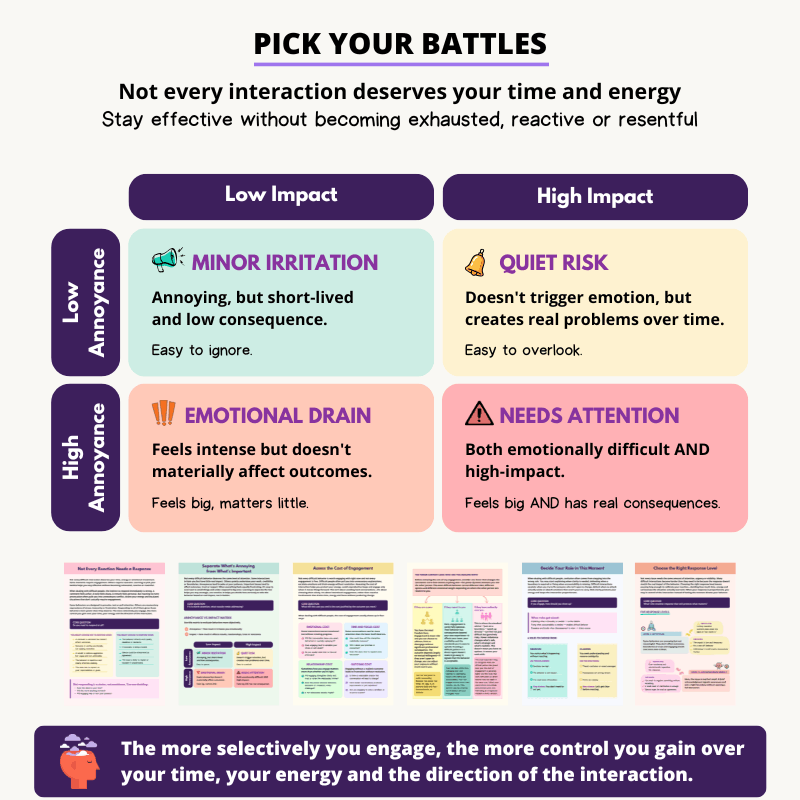
Decide when and how to engage, communicate and protect your energy long-term.
-
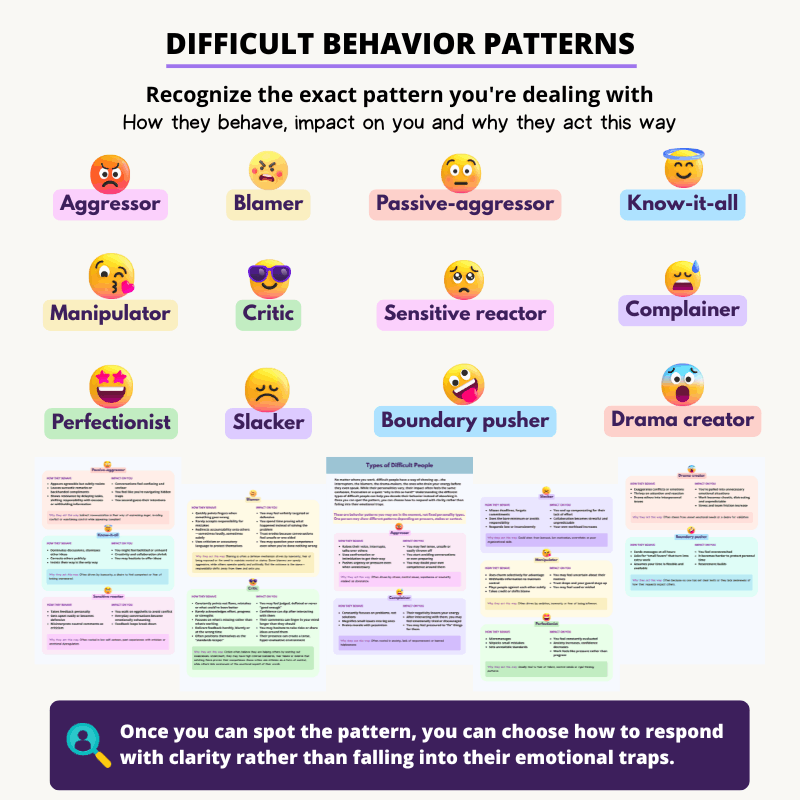
Aggressor: Raises their voice, interrupts or uses pressure and intimidation to get their way.
-
Complainer: Focuses on problems over solutions and drains morale with constant negativity.
-
Blamer: Quickly points fingers and rarely accepts responsibility when something goes wrong.
-
Critic: Constantly points out flaws and rarely acknowledges effort or progress.
-
Passive-Aggressor: Appears agreeable but resists subtly through delays, sarcasm or withheld information.
-
Know-It-All: Dominates discussions and insists their way is the only way.
-
Sensitive Reactor: Takes feedback personally and gets defensive or upset easily.
-
Slacker: Misses deadlines and does the bare minimum, leaving others to compensate.
-
Manipulator: Uses charm selectively and withholds information to maintain control.
-
Perfectionist: Micromanages and sets unrealistic standards that raise everyone's anxiety.
-
Drama Creator: Exaggerates conflict and thrives on attention and reaction.
-
Boundary Pusher: Sends messages at all hours and treats your time as endlessly available.
-
Unmet needs and hidden insecurities: The behavior is an unconscious attempt to meet a psychological need.
-
Low self-awareness: They genuinely don't notice the impact of their tone or style.
-
Poor emotional regulation: Reactions come from stress and low emotional capacity, not a desire to hurt you.
-
Conflicting communication styles: The friction comes from a style mismatch, not actual difficulty.
-
Different stress responses: Fight, flight, freeze, or fawn patterns intensify under pressure.
-
Lack of skills: They simply haven't learned how to communicate, give feedback or manage conflict well.
-
Rigid beliefs and fixed mindsets: Internal rules like "my way is the only right way" drive inflexibility.
-
Personal issues spilling into work: Family conflict, burnout or financial stress carried into the office.
-
Long-standing habits: Patterns that have simply never been challenged or corrected.
-
Workplace power dynamics: Sometimes the environment, not the person, is the real problem.
-
Behavioral: Being interrupted, talked over or having credit taken for your work.
-
Communication: Blunt tone, vague instructions or being spoken to disrespectfully.
-
Fairness & Justice: Favoritism, unequal workload or rules applied inconsistently.
-
Boundaries: After-hours messages, last-minute requests or being expected to always be available.
-
Process & Workflow: Last-minute changes, poor planning or constant urgent fire-fighting.
-
Relational: Being ignored in meetings, excluded from decisions or micromanaged.
-
Personal: Your own high self-expectations, low confidence or stress from outside work.
-
The 10-Second Trick: Notice the trigger, pause for ten seconds and shift focus to something neutral before responding.
-
Name the Emotion: Labeling what you're feeling in the moment to reduce its intensity.
-
The Breath & Hold Method: A breathing technique that shifts your body out of fight-or-flight.
-
Observer: You notice what's happening without reacting yet, useful when emotions are high.
-
Clarifier: You seek understanding and remove ambiguity when facts are missing.
-
Boundary Setter: You calmly define limits when expectations are repeatedly crossed.
-
Problem-Solver: You focus on solutions once emotions have settled enough for logic.
-
De-escalator: You lower emotional intensity when someone is upset or reactive.
-
Disengager: You intentionally step back when the cost of engaging outweighs the return.
The examples are workplace-focused (coworkers, managers, meetings, deadlines), but the underlying skills—trigger awareness, staying centered, boundary-setting, deciding when to engage—apply just as well to difficult people outside of work
It draws on established ideas from psychology and workplace communication—emotional regulation, stress responses, self-awareness, assertive communication, boundaries and reflective practice—translated into practical worksheets and real workplace scenarios rather than left as theory.
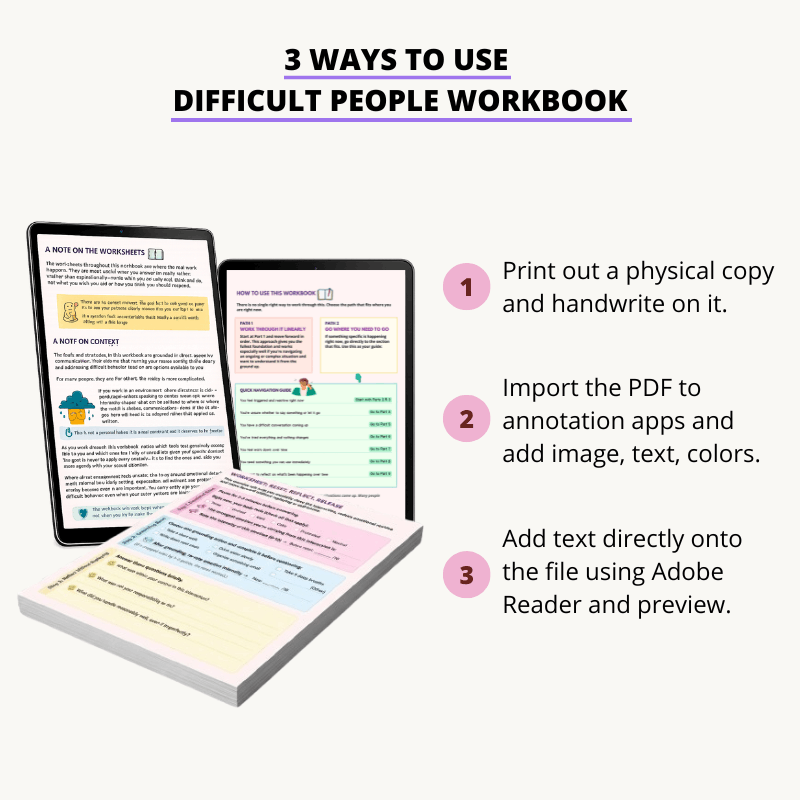
It's built to be used, not just read once. Most sections include worksheets, reflection exercises and scripts you can revisit whenever a new difficult situation comes up—work through it start to finish or jump straight to the section you need right now.
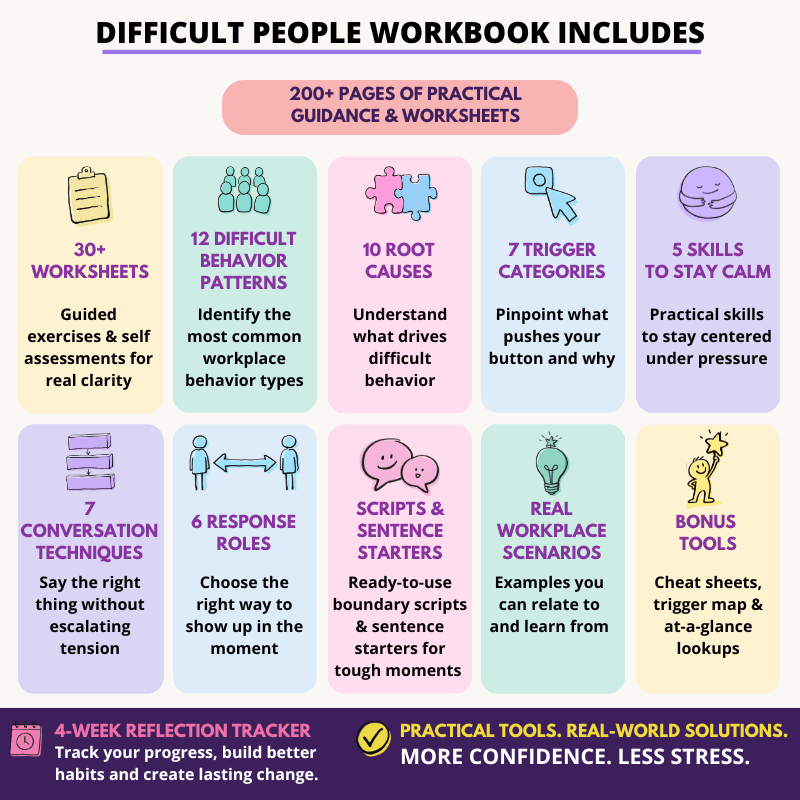
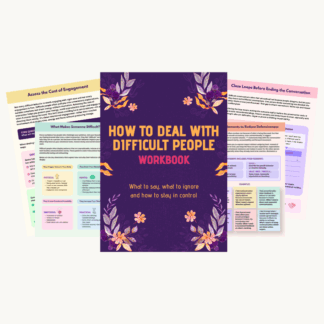
A 200+ page, 9-part digital workbook, including:
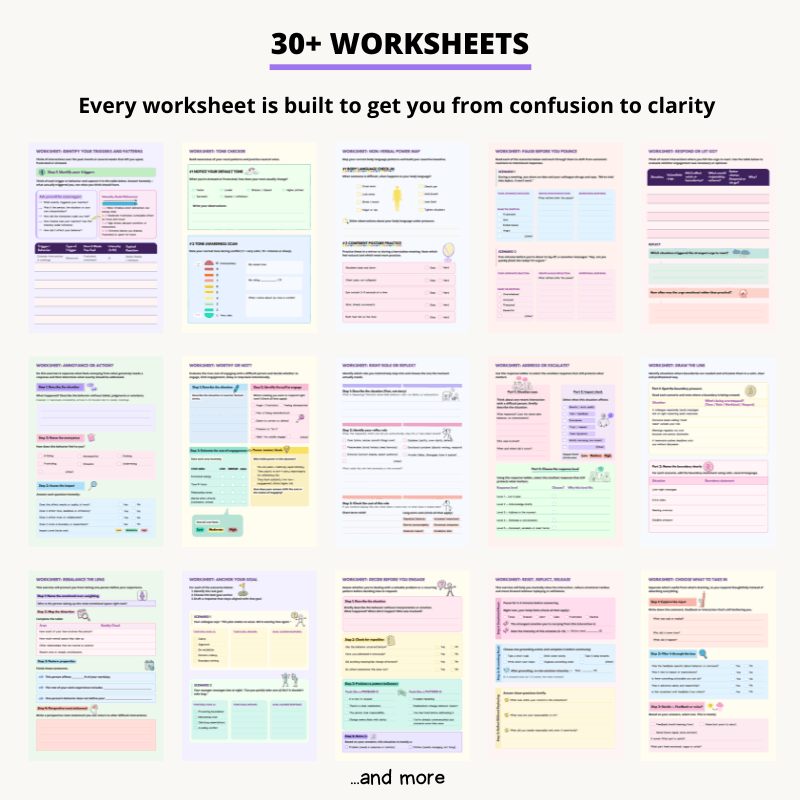
- 30+ worksheets built around real workplace scenarios
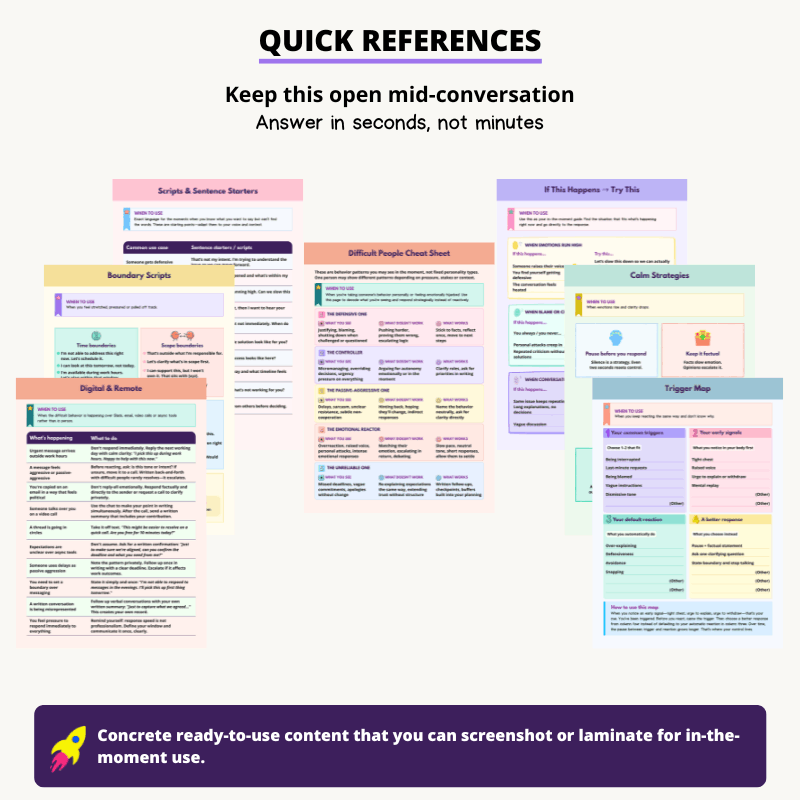
- Quick-reference cheat sheets and laminate-style cards for at-a-glance use
- Ready-to-use scripts and sentence starters for the moments you freeze up
- Boundary Scripts for common workplace overreach
- A Trigger Map to identify your personal patterns
- An Impact Reflection Grid to assess frequency and severity of situations
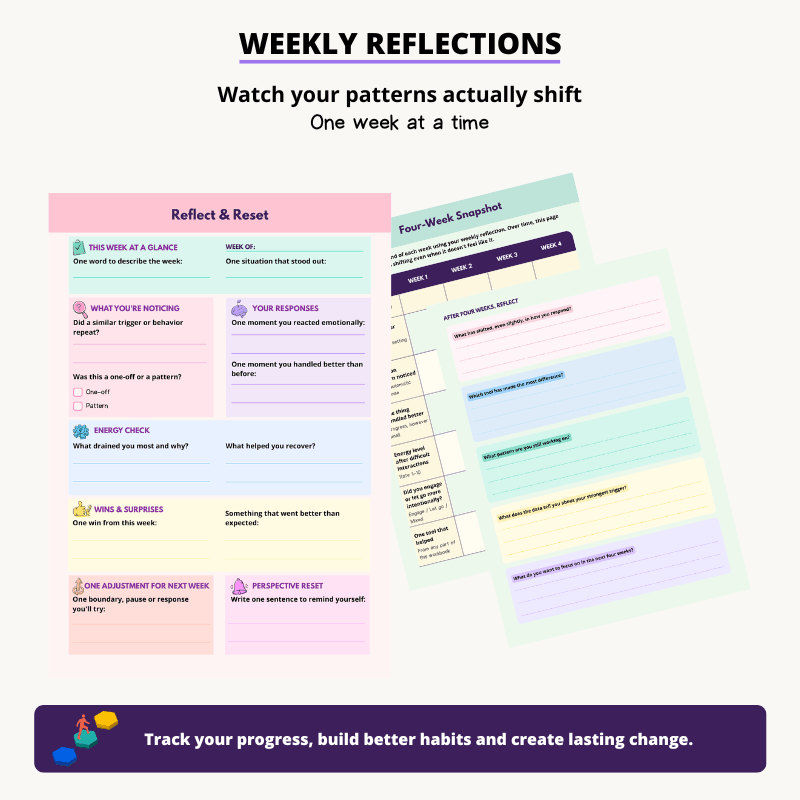
- A 4-week reflection tracker to see your patterns shift over time
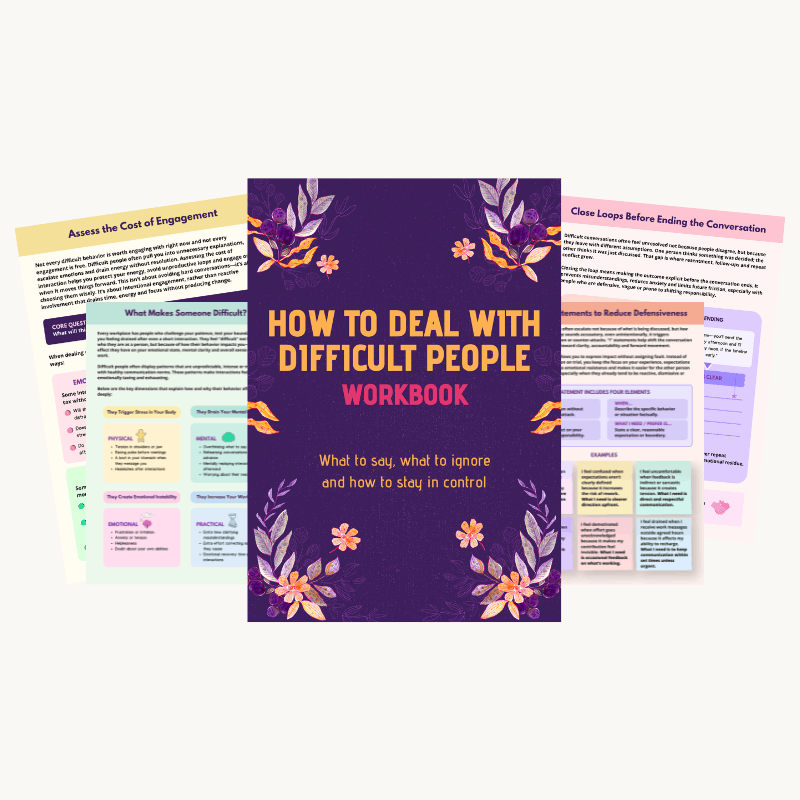
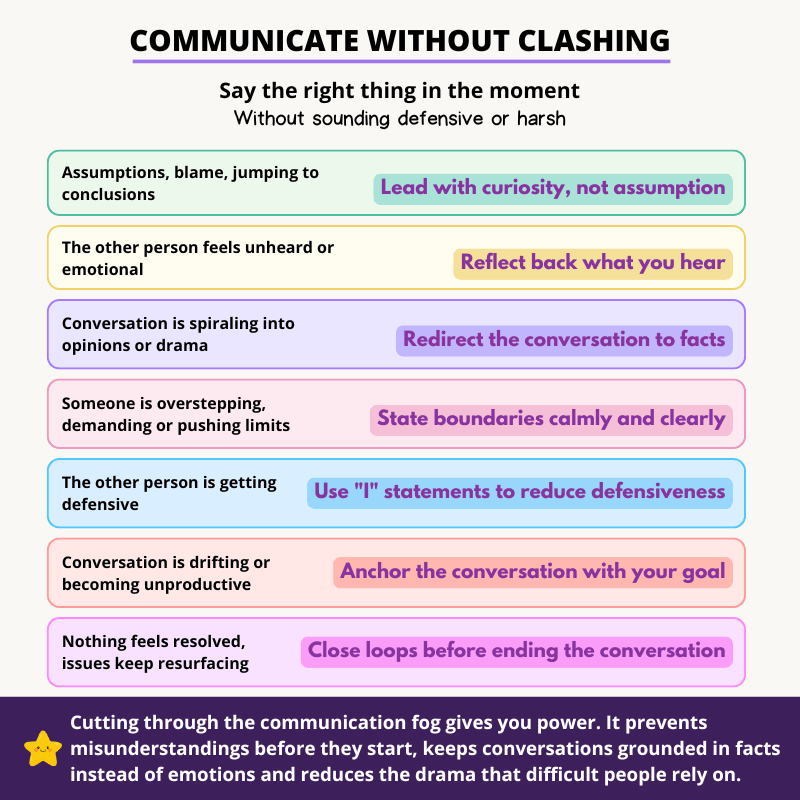
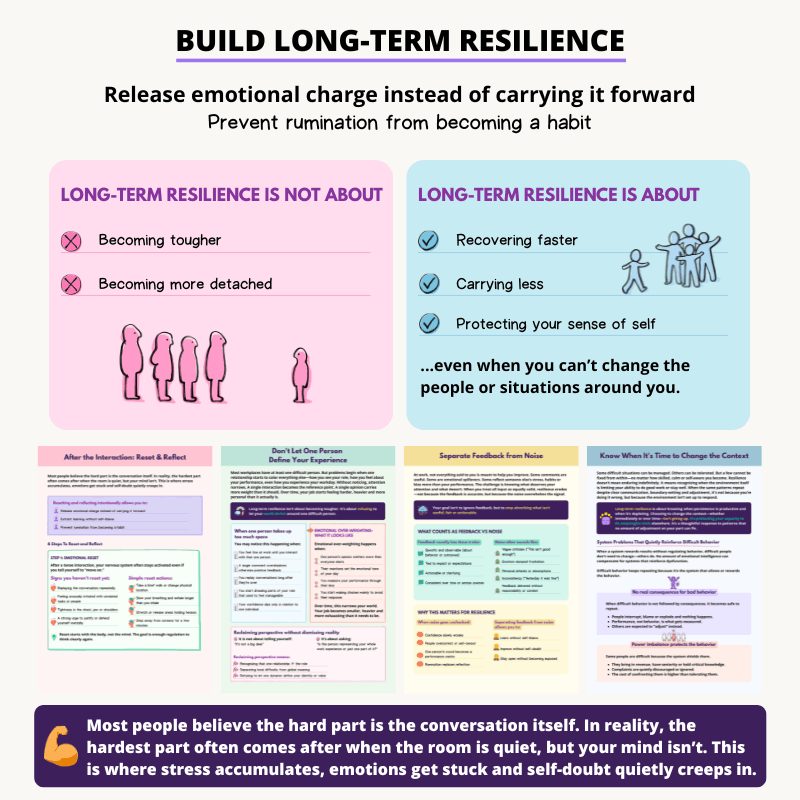
How To Deal With Difficult People Workbook has nine parts that build on each other: understanding difficult behavior, knowing your triggers, staying centered, picking your battles, communicating without clashing, managing what you can't fix, building long-term resilience, quick references and weekly reflections.
Reviews
There are no reviews yet.